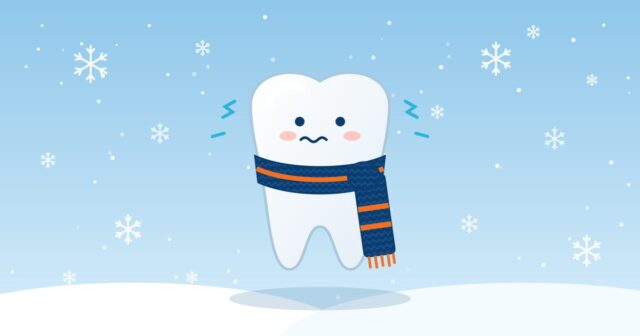
That Sharp Zing When You Step Outside
You walk out the door on a freezing Chicago morning, take a breath, and feel a sharp jolt in your teeth. If that sounds familiar, you’re not alone. Sensitive teeth are one of the most common complaints we hear once winter arrives in Berwyn.
The cold itself isn’t the real problem. It’s usually a sign that something is letting the cold reach the nerve inside your tooth. The good news is that most tooth sensitivity is easy to treat. Here’s why it happens, what you can do at home, and when it’s time to come see us.
Why Cold Makes Teeth Hurt
Each tooth has three main layers. The outside is enamel, the hardest material in your body. Under it is dentin, a softer layer filled with tiny channels. At the center is the pulp, where the nerve lives.
When enamel is healthy and your gums cover the roots, the nerve is well protected. But when enamel wears thin or gums pull back, the dentin is exposed. Cold air, ice water, or even a cold spoon can then travel through those tiny channels and trigger the nerve. That’s the quick, sharp pain you feel.
Winter makes it worse in a few ways. Breathing cold air through your mouth chills your teeth directly. Going from icy air to hot coffee or soup creates quick temperature swings. And many people breathe through their mouths more when they have a winter cold.
Common Causes of Sensitive Teeth
Cold weather brings sensitivity to the surface, but one of these is usually the cause underneath:
- Worn enamel. Brushing too hard, using a hard-bristled brush, or frequent acidic foods and drinks can wear enamel down over time.
- Gum recession. When gums pull back, they expose the tooth roots, which have no enamel at all. Gum disease and aggressive brushing are common causes.
- Cavities. Decay creates an opening straight toward the nerve. Sensitivity in just one tooth is often a sign of a cavity.
- Cracked teeth or worn fillings. Tiny cracks and old fillings with gaps let cold seep in.
- Grinding or clenching. Many people clench their teeth more when they’re stressed or shivering. Over time, this wears enamel and can cause cracks.
- Recent whitening. Teeth whitening can cause temporary sensitivity that usually fades within a few days.
How to Get Relief at Home This Winter
- Switch to a toothpaste for sensitive teeth. Look for one labeled for sensitivity and use it twice a day. It works gradually, so give it a few weeks.
- Use a soft-bristled brush. Brush gently in small circles instead of scrubbing back and forth.
- Breathe through your nose outside. Pull your scarf up over your mouth on very cold days to warm the air before it reaches your teeth.
- Let drinks cool a little. Avoid going straight from icy air to very hot coffee or tea.
- Go easy on acidic foods and drinks. Citrus, soda, and wine soften enamel. Rinse with water afterward.
- Don’t skip flossing. Healthy gums help protect your tooth roots.
When Sensitivity Means Something More
A quick twinge that fades in a second or two is usually mild sensitivity. Call us for a visit if you notice any of these:
- Pain that lingers for more than a few seconds after the cold is gone
- Sensitivity in one specific tooth rather than several
- Pain when you bite down or chew
- Sensitivity that keeps getting worse, even with a sensitivity toothpaste
- Swelling, a bump on the gum, or throbbing pain that wakes you up at night
Swelling or throbbing pain can be a sign of infection and shouldn’t wait. Not sure how urgent your pain is? Read our guide, Is My Toothache an Actual Dental Emergency?
How We Treat Sensitive Teeth
The right treatment depends on what’s causing your sensitivity, so we start with a careful exam. Depending on what we find, we may recommend:
- Fluoride treatment to strengthen enamel and calm sensitivity. Learn more in our post on fluoride treatments for adults.
- Bonding or a sealant to cover exposed root surfaces.
- Replacing a worn filling or treating a cavity.
- Gum care, through our periodontal care services, if gum recession or gum disease is the cause.
- A night guard if grinding is wearing down your teeth.
- Root canal therapy in the rare cases where the nerve is damaged or infected. It’s the treatment that finally stops the pain.
Don’t Let Winter Make You Wince
You shouldn’t have to brace yourself every time you step outside or sip something cold. Dr. Robles, Dr. Siddiqui, and our team can find the cause of your sensitive teeth and help you feel comfortable again. We care for families in Berwyn, Cicero, Riverside, North Riverside, Oak Park, and Lyons, in English and Spanish.
And if you haven’t used your dental benefits this year, there’s still time before they reset on January 1.
Call us at (708) 788-4444 or book your appointment online.
Robles Family Dental
3253 S Harlem Ave, Suite #1c
Berwyn, IL 60402